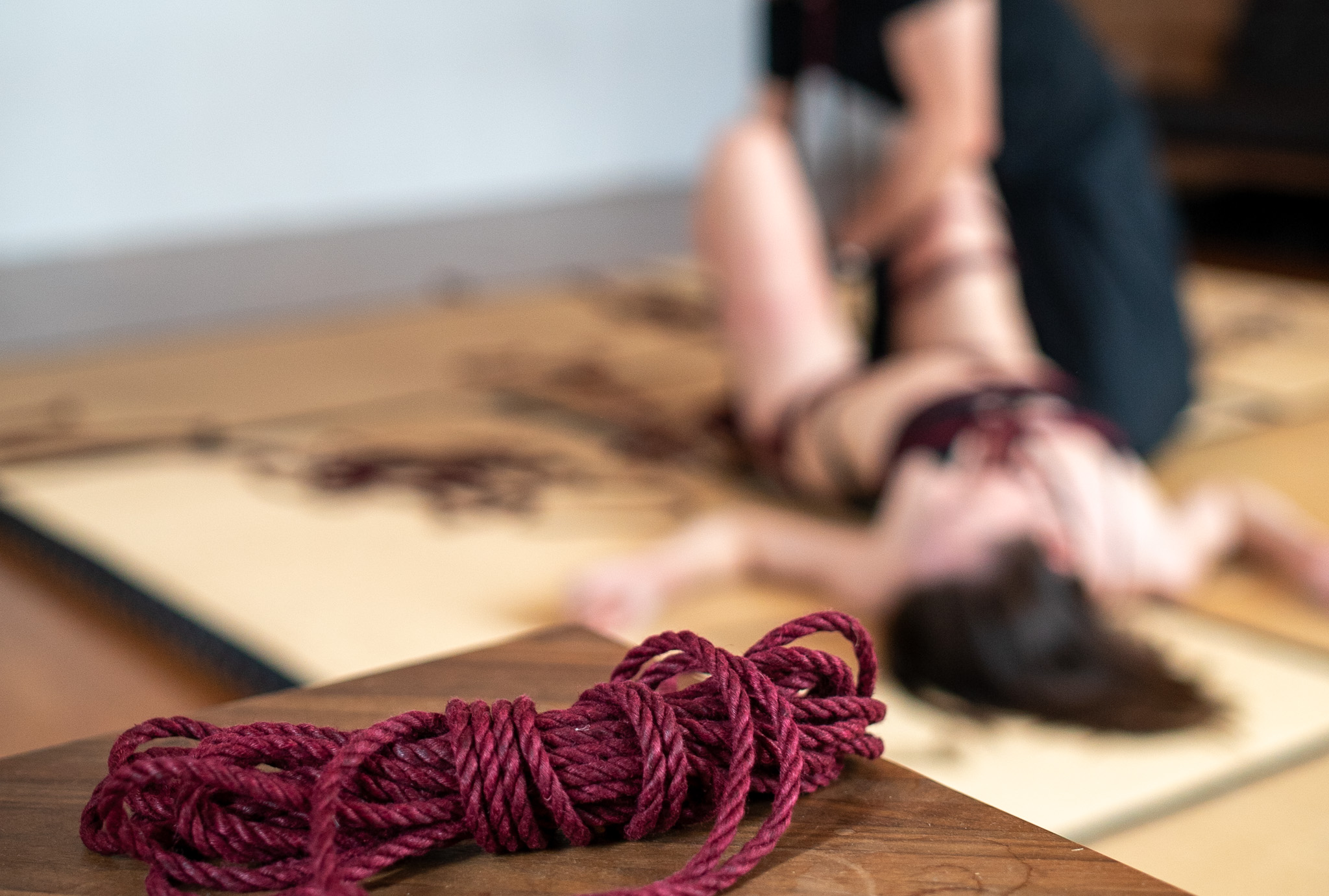
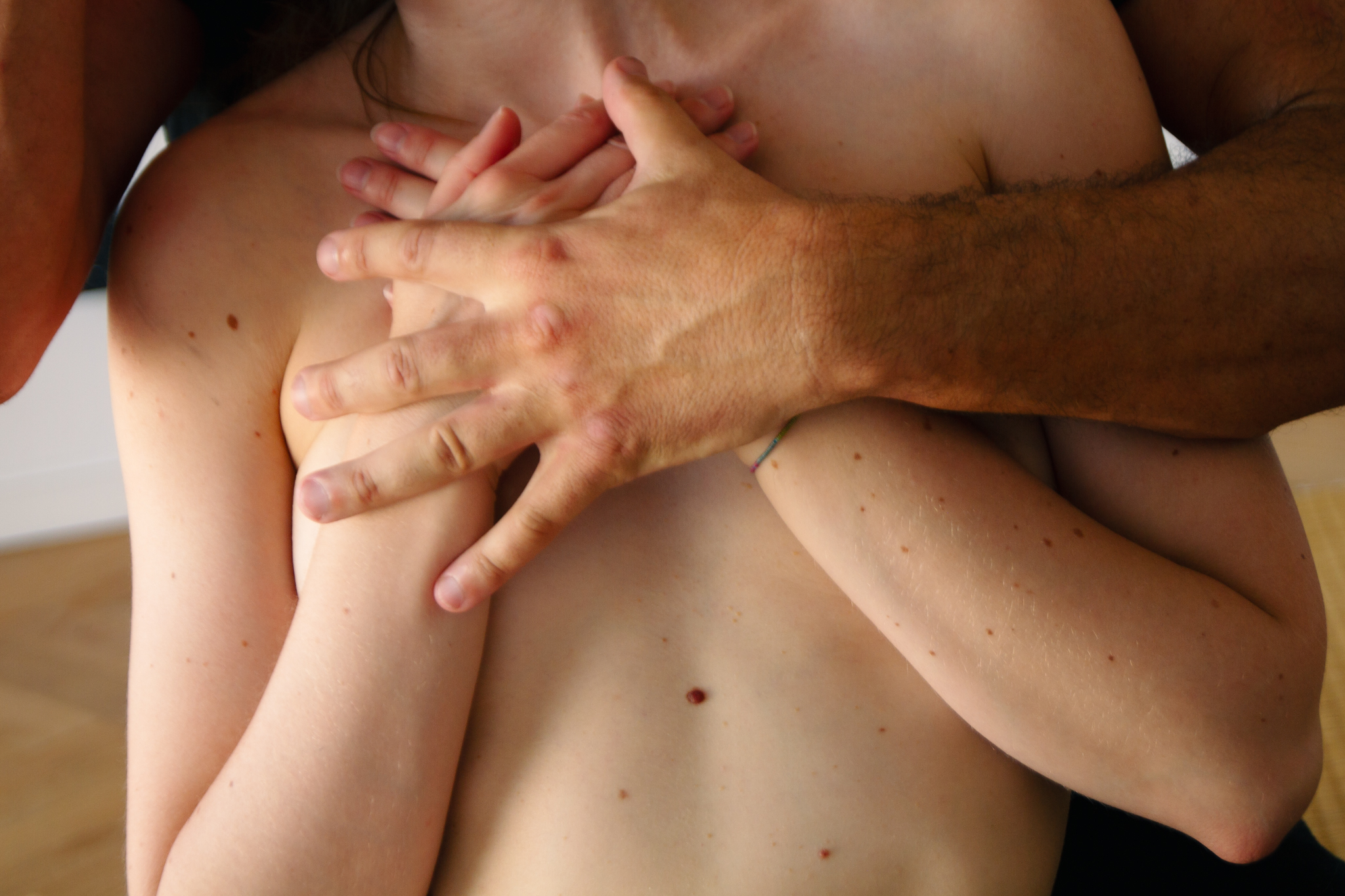
Yoni Massage in Geneva
Most people know five ways to touch a yoni. The tantric tradition knows more than forty, and learning them turns out to be less about technique than about presence, patience, and the quality of attention you bring to another body.
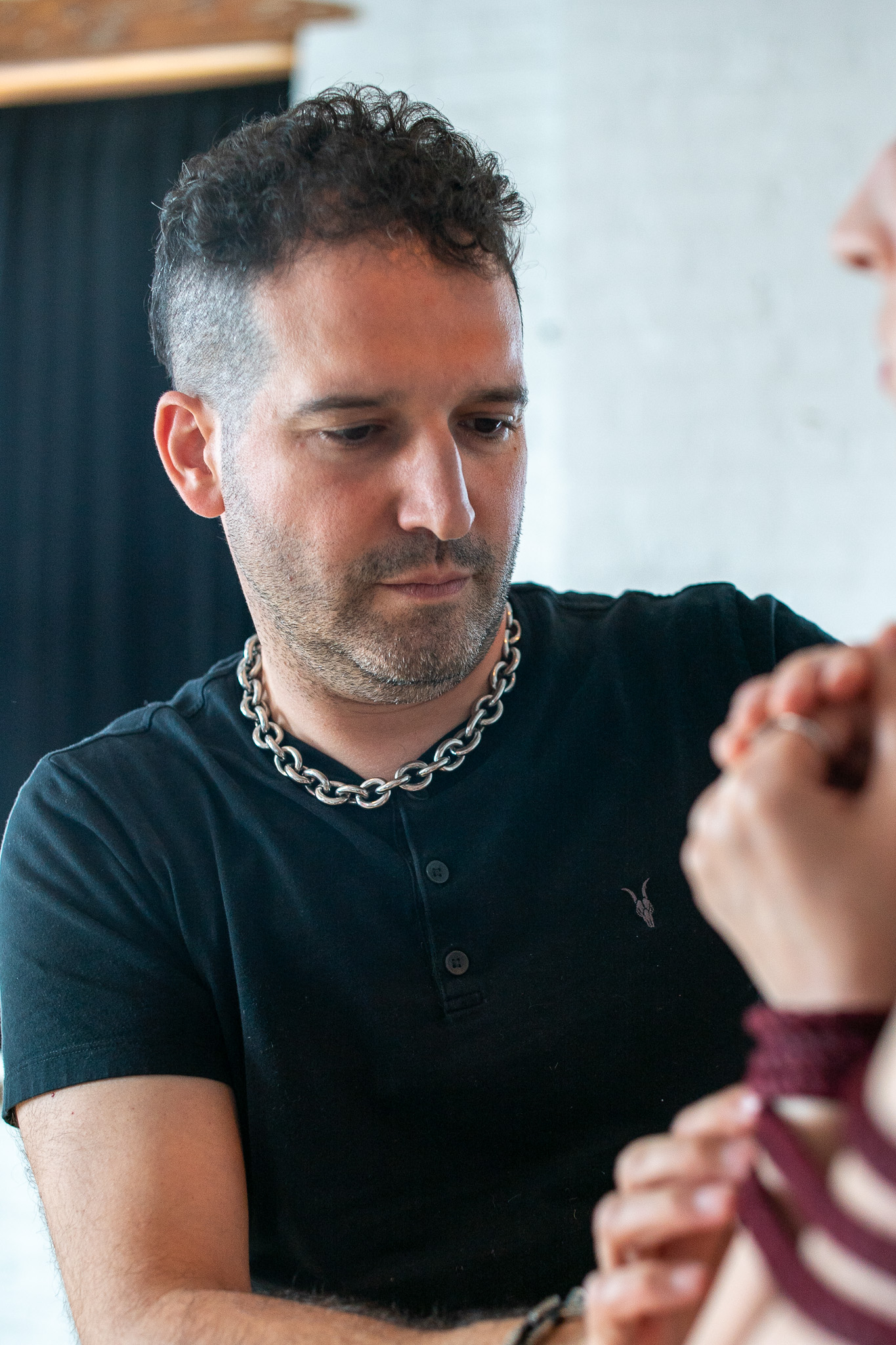
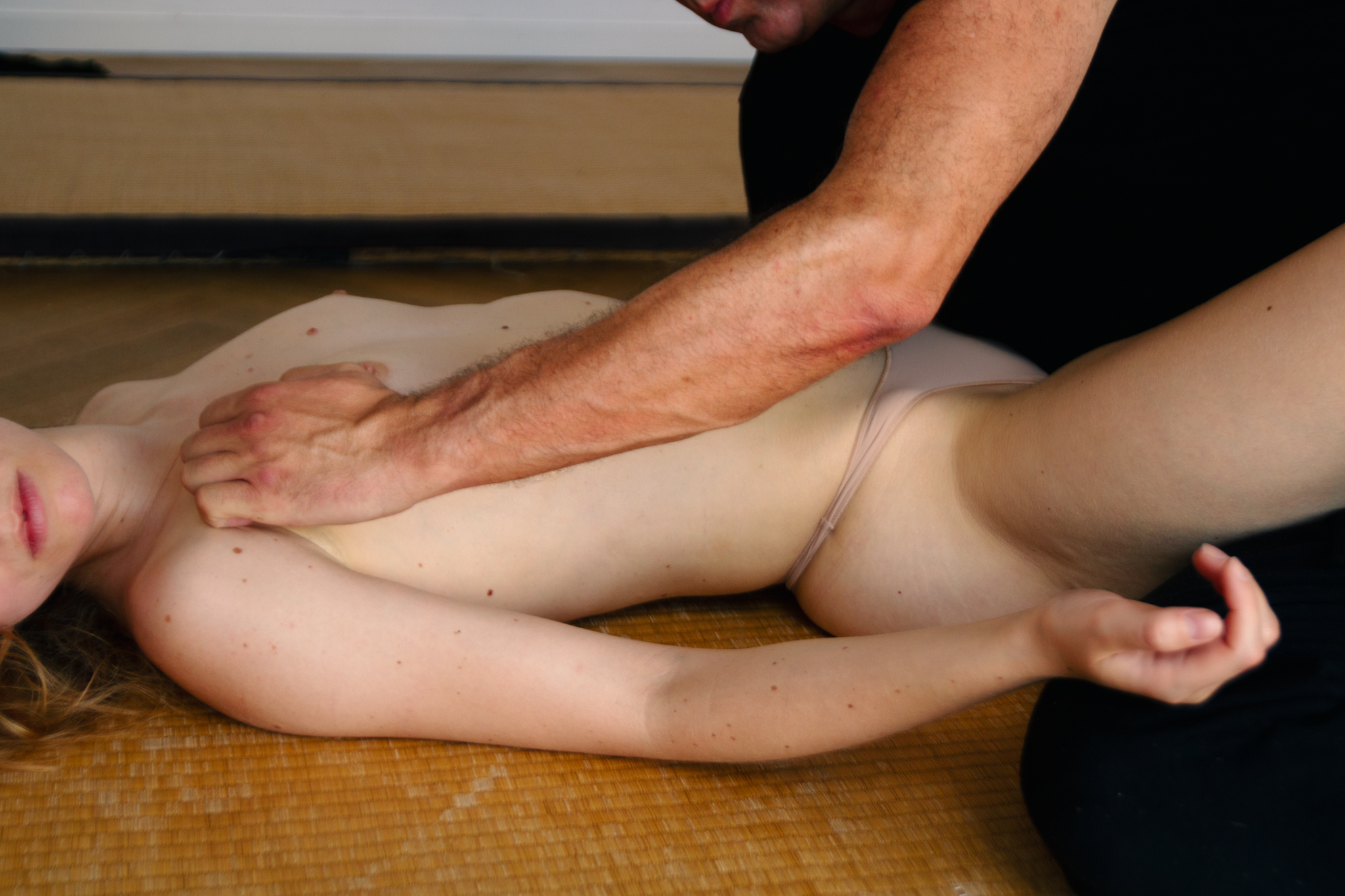
Most people who care about touch already know a handful of ways to touch a yoni. Two, three, maybe five. They learned them somewhere, from a partner, from a screen, from repetition, and they return to them the way you return to a familiar road.
The tantric tradition counts more than forty.
That single fact is the reason this page exists. Not to sell you on yoni massage as something you should want, and not to promise you transformation. Simply to say that this is a far larger practice than most people imagine, and that the size of it is worth knowing about. If you live in or near Geneva and you have been curious, this is an honest map of the territory.
What is yoni massage
Yoni is a Sanskrit word. It names the vulva and vagina, but it carries none of the clinical distance of the anatomical terms and none of the crudeness of the slang. It means, roughly, sacred space, or origin. The word matters because it sets the register of the whole practice. You are not working on a body part. You are in relationship with a place.
Yoni massage, then, is a form of intimate bodywork that gives sustained, attentive touch to the vulva and the vagina, held inside a frame of consent, breath, and presence. It sits inside the wider family of tantric and somatic practices, alongside tantric massage and nervous system work. In Geneva and across Switzerland it appears in tantra circles, in somatic bodywork sessions, and in the quiet private learning that couples do at home.
Here is the thing people miss. The touch itself is the smallest part.
Most people know five ways. The tradition knows more than forty.
Think about how you were taught, if you were taught at all. You learned pressure, a rhythm, a spot, and you learned that these things tend to work. So you repeat them. Repetition is efficient, and it is also a cage. When you only know five ways to touch, every yoni becomes the same yoni, and every session becomes the same session.
The tantric tradition maps the yoni with a granularity that surprises almost everyone who encounters it for the first time. Different zones. Different qualities of contact: still pressure, slow circling, holding without movement, the lightest possible brush, warmth without motion at all. Different speeds, different intentions, different points of entry into arousal and, more interesting, points that have nothing to do with arousal and everything to do with release, memory, or simple aliveness. More than forty distinct approaches, and that is before you begin to combine them.
This is why the practice is genuinely interesting to learn, even for people who consider themselves experienced. There is a real body of knowledge here. There is a great deal to study, a great deal to practice, and a great deal to discover in your own hands and in your own body. You do not arrive knowing it. You grow into it.
Why the technique is the smallest part
And yet. If you learn yoni massage seriously, something strange happens. You go in expecting to collect techniques, forty of them, a bigger toolbox, and within a few sessions you realize the techniques are not the point.
What you are actually learning is presence. Waiting. The capacity to keep your attention on another person without rushing them toward a result.
The forty movements are real and worth knowing, but they are a doorway, not a destination. The moment you stop performing a technique and start listening with your hands, the practice changes character completely. You feel the difference between touch that is trying to produce an outcome and touch that is simply, fully there. A yoni knows the difference immediately. Every body knows the difference immediately. We have all been touched by someone who was somewhere else.
This is the pause before contact, and it is where the whole practice actually lives. Not in the hand that moves, but in the attention that arrives before the hand does. Regulation before arousal. Presence before pleasure. You learn to wait, and in the waiting you learn that waiting is not empty. It is the most alive part.
Who yoni massage is for
There is no single person this practice is for, and I want to resist the temptation to narrow it.
For some women, sensuality is a difficult country. Numbness, disconnection, a history the body has not finished processing, a long stretch of feeling nothing much at all. For them, slow and attentive yoni massage can be a way back into a body that had gone quiet. Not through intensity, but through safety. The nervous system settles first. Sensation returns after. This is somatic work in the truest sense, and it can be genuinely valuable for a woman who has felt like a stranger to her own pleasure.
But I will not pretend that healing is the only good reason, because that would be its own kind of dishonesty. Sometimes there is nothing to fix. Sometimes a woman is perfectly at home in her body and simply wants more. More range, more depth, more of the forty doors instead of the five. That is reason enough. Pleasure does not need a wound to justify it.
And it is for partners, of all genders, who want to touch with more intelligence and less autopilot. Learning yoni massage will change how you touch everyone, because it changes how you pay attention.
Pleasure is healing, and healing is pleasure
There is a false border most of us carry, a line between pleasure on one side and healing on the other. Pleasure is treated as indulgence, healing as work. The tantric view erases that line, and honestly, so does the body.
Pleasure is healing. Healing is pleasure. They are the same event seen from two angles. When a body is met with warmth and patience and no agenda, the nervous system does what it has always known how to do: it softens, it opens, it lets go of what it was holding. That softening feels good, and the good feeling is not a side effect of the healing. It is the healing. The parasympathetic settling, the flood of safety, the sense of being received rather than used. Ecstasy is not the goal. Regulation is the gateway, and pleasure is the sound the body makes when it finally trusts.
So indulge. That is not a word I use carelessly. There is nothing self indulgent about learning to give and receive this kind of attention. It is one of the more generous things you can learn to do, and you are allowed to enjoy it while you learn.
What it actually gives you: a stronger knowledge of yourself and of the other
Here is the return on the practice, and it is the reason I think it is worth your time regardless of where you start.
Learning yoni massage deepens your knowledge of yourself. If you receive it, you meet parts of your own responsiveness you did not have a map for. You learn what your body actually wants rather than what it has learned to expect. If you give it, you develop a literacy in another person that carries into everything else you do together.
And it deepens your knowledge of the other. To touch someone this slowly, this attentively, is to read them. You learn a partner the way you learn a language, over time, with mistakes, with corrections, with the slow accumulation of understanding that no shortcut can give you. That knowledge is rare and it is valuable, in the plain sense of the word. It makes intimacy less of a guess.
This is the quiet argument of the whole practice. Attention is the only intimacy that really matters. The rope, the touch, the forty techniques, all of it is a frame around one skill: the quality of attention you are able to bring to another body. Everything else is decoration.
Consent and safety are the practice, not the paperwork
Before any of the forty movements, before the first contact, there is consent. And consent in this practice is not a box you tick at the beginning and forget. It is a living conversation that runs underneath the whole session, in words at the start and in attention throughout.
This matters more here than almost anywhere, because the yoni is a place that holds. It holds pleasure, and it also holds history. Tension that was never named, experiences the body filed away and did not process. When you touch with real presence, some of that can surface. A good practitioner is not surprised by this and does not rush past it. Safety is what makes the surfacing possible, and safety is not a slogan you say once. It is something you build, moment by moment, by staying reachable, by slowing down when the body asks you to, by treating a flinch as information rather than an interruption.
So if you are choosing where to learn or receive yoni massage, watch how consent and safety are handled. Not whether they are mentioned, but whether they are lived. That is the whole difference between a practice and a performance.
Yoni massage in Geneva and Switzerland
Geneva is a discreet city, and that discretion shapes how this practice lives here. It is quieter than Berlin, more private, more likely to happen behind a closed door than on a stage. That is not a limitation. Privacy suits this work.
If you are looking for yoni massage in Geneva, you will find it in a few forms. Somatic bodywork sessions that include it as part of a larger nervous system practice. Tantra and conscious sexuality circles across French speaking Switzerland. And, increasingly, couples and individuals who want to learn the practice properly rather than only receive it once. Switzerland has a small but serious community around tantric massage, consent culture, and embodiment, and Geneva sits comfortably inside it.
Wherever you begin, the questions to ask are the same. Is consent treated as a living conversation rather than a form to sign. Is safety a practice or a slogan. Does the person work from presence or from performance. The answers to those three questions tell you almost everything.
Frequently asked questions
What is yoni massage, exactly?It is attentive, consent based bodywork for the vulva and vagina, held inside a frame of breath and presence. It draws on tantric and somatic traditions. The touch matters less than the attention behind it.
What are the benefits of yoni massage?People describe a wide range: a return of sensation after numbness, deeper relaxation, a more settled nervous system, a fuller relationship to their own pleasure, and greater trust with a partner. The most consistent benefit is simple. You come to know your own body, or your partner's, with more accuracy and less assumption.
Is yoni massage sexual?It can involve arousal, and it is not aimed at it. The practice is intimate and erotic in the original sense of that word, alive, but the goal is presence rather than a particular outcome. Whether a given session is sexual is a matter of intention and agreement, set clearly in advance.
How is it different from tantric massage?Yoni massage is one part of the broader field of tantric massage. Tantric massage may work with the whole body. Yoni massage focuses its attention on one place, and on the quality of contact there.
Can I learn yoni massage rather than only receive it?Yes, and I would argue that learning it is where the real value lives. Receiving it once is an experience. Learning it is an education, in touch, in patience, and in another person.
Learn or experience yoni massage in Geneva
If any of this has stayed with you, you are welcome to reach out. I offer sessions and private teaching in and around Geneva for individuals and for couples, whether you are returning to a body that has gone quiet or simply want to move past the five ways you already know toward the forty you do not.
To book a session or to ask a question before you decide, send me a direct message on Instagram at @aether_olivier_, or use the contact link in the profile. No pressure, no assumptions. Just a conversation about where you are and what you are curious about.
The practice will wait for you. Patience, after all, is the first thing it teaches.


Come, step into the sacred dance of surrender.
This is an invitation to those who yearn to feel more, to trust deeper, and to meet themselves anew.