Integration After a Tantra Retreat: What I Wish I'd Known
After my first shamanic retreat, I made a critical mistake: I went straight back to normal life. Kids, work, meetings—while my nervous system was still somewhere else entirely. If I'd known then what I know now, I would have taken time off to integrate. Integration isn't about holding onto the peak experience. It's about allowing your nervous system to metabolize what opened during the retreat. The insight happens fast—integration takes weeks. In this article, I share what I've learned from facilitating retreats, neuroscience research, and my own mistakes about why those first days after a retreat matter so much, and what actually helps (hint: it's simpler than you think).
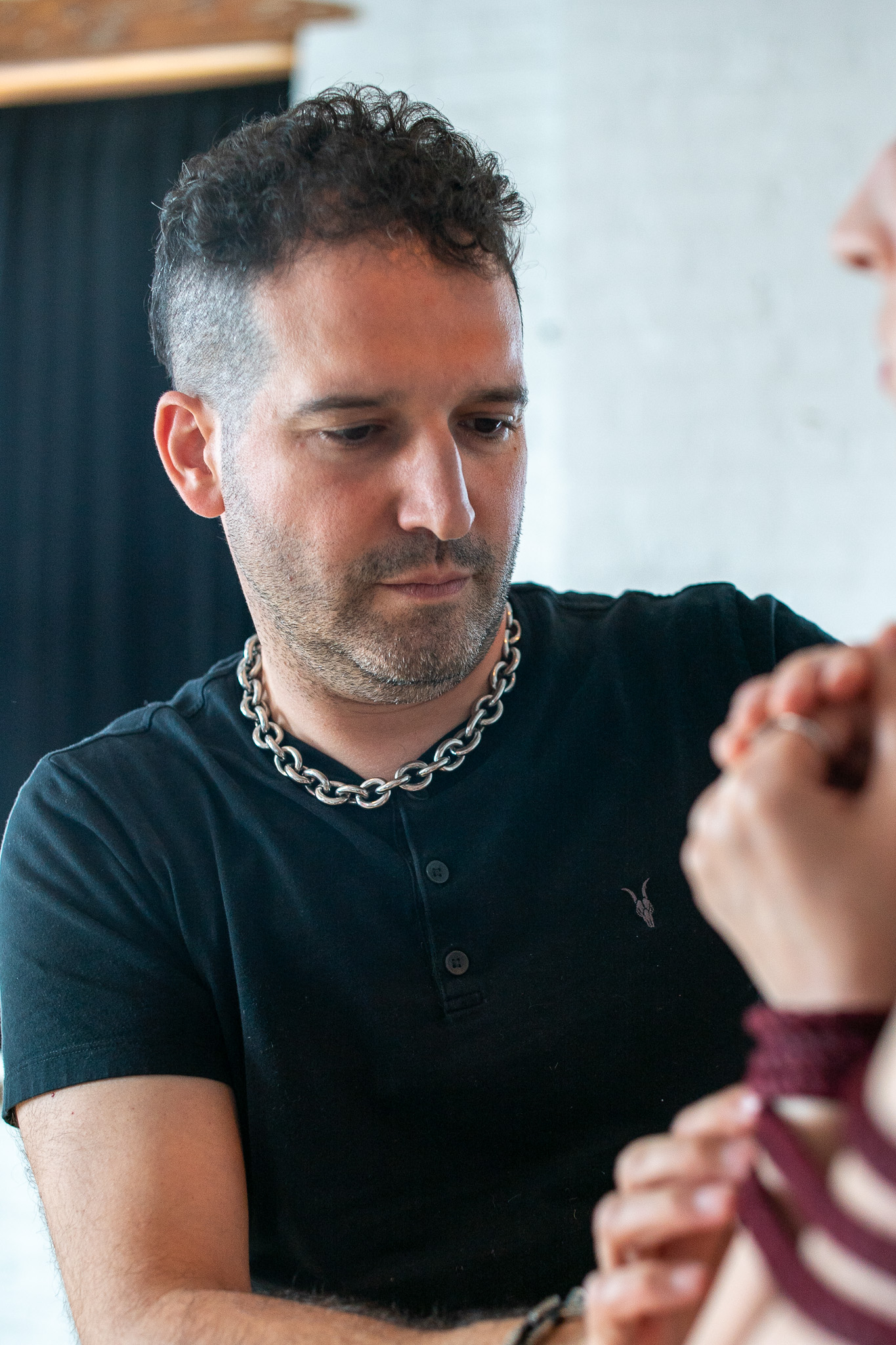
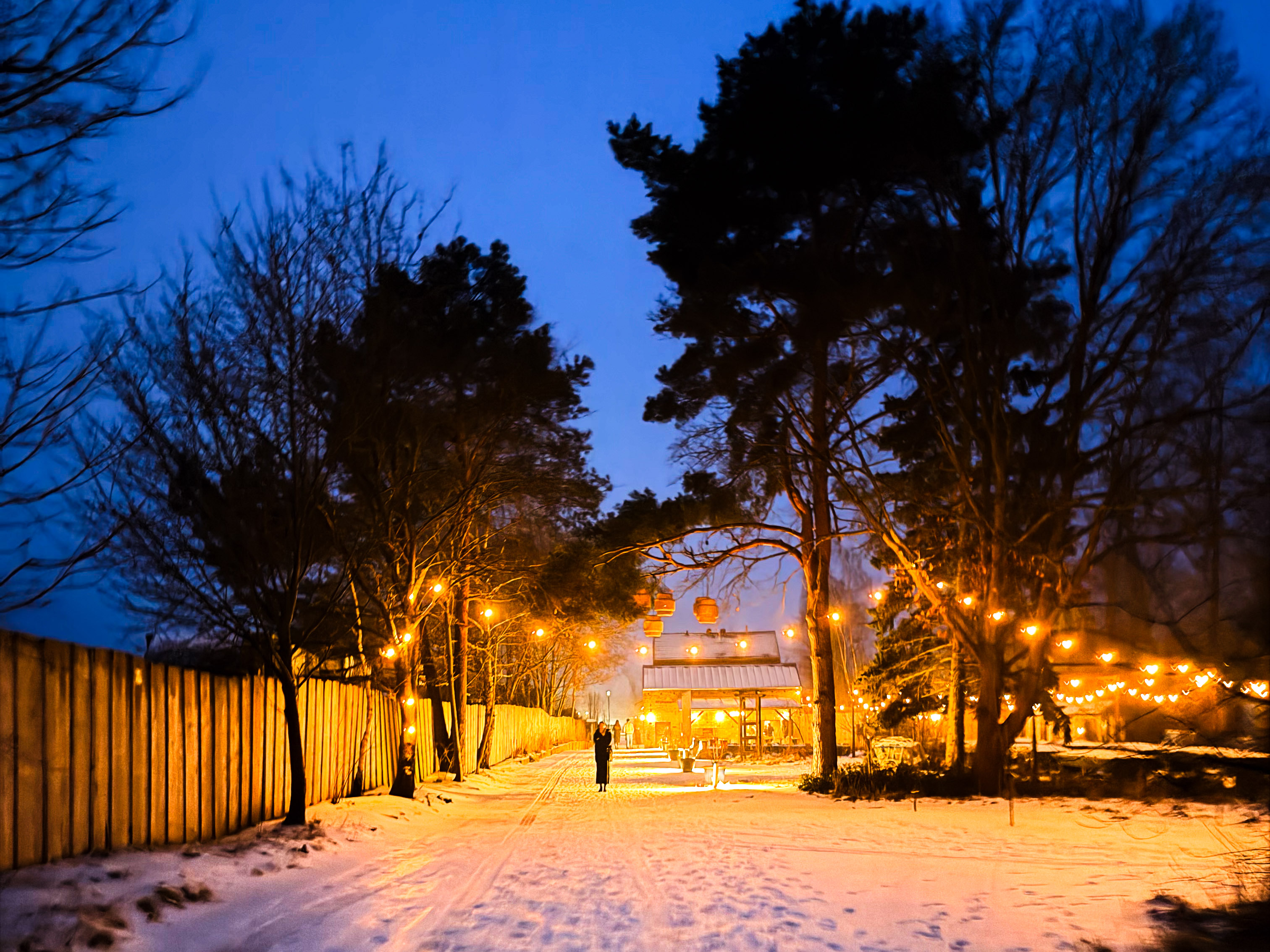
I'm writing this article sitting in my living room, a few days after facilitating a tantra-shibari retreat. There's a quietness in me that I've learned to recognize... that particular softness that comes after holding space for deep transformation. And every time I come back from these retreats, I remember my first one.
It was my first ISTA retreat, years ago. I came home on a Sunday evening, still buzzing with everything I'd experienced, everything that had opened in me. Monday morning, I was making breakfast for my kids. By 9, I was back at work, sitting in meetings, trying to act normal while my nervous system was still somewhere else entirely.
"I went from touching the divine on Sunday to changing diapers on Monday. My body didn't know which reality was real."
If I'd known then what I know now, I would have taken at least a day or two off. I would have given myself permission to simply be with what had moved through me.
But I didn't know. And because I made that mistake, I want to share what I've learned since, from my own experience, from organizing and facilitating many retreats, and from the research I've been reading. Now, I always create a buffer. A few days with less on my calendar. Space to land.
This is what I've discovered about integration.
The retreat is not the practice. Integration is.
"You didn't go to the retreat to feel good for a weekend. You went to change your life. That happens in the weeks after, not during."
A tantra retreat often feels like a threshold. Something opens. Something softens. Something becomes possible.
And yet, what happens after we leave the space is rarely spoken about with the same care as what happens inside it.
From both research and my lived experience, one thing has become increasingly clear: the retreat itself is just the beginning.
Why those first few days matter so much
"Your brain tagged the experience as important. But it takes weeks for your nervous system to actually install the update."
In intensive embodied experiences... whether in tantra, somatic work, ritual, or contemplative retreats... we feel more, sense more, connect more quickly. We often touch places that are usually protected or dormant.
The neuroscience here is fascinating. That intensity we feel activates our brain's learning mechanisms... our amygdala, hippocampus, and prefrontal circuits basically "tag" the experience as important. But here's the thing: these insights stabilize into lasting change only over time, not in the moment itself. They need repetition, rest, sleep, and nervous system regulation over days and weeks.
"Insight is the lightning. Integration is the rain that follows."
In other words, insight happens fast. Integration does not.
Integration is not about holding on to the peak
"Trying to stay in the bliss is like trying to live at the top of the mountain. You'll freeze to death up there."
One of the most common things I see... in participants and honestly, in myself... is the idea that integration means preserving the intensity of the retreat.
I've watched people (and been that person myself) trying to "stay in the peak," only to feel frustrated or pressured when ordinary life returns.
"I touched something so important. Why can't I stay there?"
Here's what I've learned from trauma-informed work and my own nervous system: we can't remain in heightened openness indefinitely. We need oscillation, contraction, ordinariness, and rhythm to reorganize safely.
"The magic isn't in staying open. It's in learning how to close and open again, consciously."
Integration is not about prolonging an extraordinary state. It's about allowing your nervous system to metabolize the experience until parts of it become ordinary, accessible, and less charged.
This is what Peter Levine and Bessel van der Kolk keep emphasizing in their work: it's not about intensity, but about titration, pacing, and regulation.
What actually happens after a tantra retreat
"Some people feel like gods. Some feel like shit. Both are integration."
I've seen this pattern repeat across so many retreats now, in tantra, shamanic spaces, and somatic work:
Some people feel an afterglow... openness, tenderness, clarity, erotic aliveness.
Others feel tired, irritable, emotionally raw, or confused.
Some feel surprisingly flat or numb and worry that "nothing happened."
Here's what I want you to know: none of these responses are signs of failure.
"If you opened Pandora's box at the retreat, don't be surprised when the shadows fly out on Tuesday."
They simply reflect your nervous system recalibrating after an unusual degree of relational, emotional, and sensory input.
Tantra retreats touch deep places... attachment patterns, sexuality, shame, boundaries, longing. These domains are deeply relational. They rarely resolve cleanly in a weekend. Instead, they surface material that wants time, support, and the rhythm of ordinary life to reorganize around.
What integration actually asks for
"The most powerful thing you can do after a tantra retreat? Walk. Sleep. Eat soup. Touch grass. I'm serious."
What I've learned, from my own mistakes and from watching others navigate this territory, is that the most helpful practices are also the least spectacular:
Slowness.
A lighter schedule for a few days. Fewer big decisions. More sleep, simple food, time in nature.
Grounding practices that are almost boring in their simplicity.
Feeling your feet on the floor. Lengthening your exhale. Walking. Warm water on your skin.
"Your nervous system doesn't need another breakthrough. It needs a nap."
Gentle reflection.
Writing or speaking about specific sensations and moments... not just the story of "what it all meant," but the actual felt experience. What did you notice in your body? What surprised you?
Connection with people who understand.
One or two people who were there with you. Or a therapist or somatic practitioner who gets embodied processes. Not to fix anything, but to witness the unfolding.
From a neurobiological perspective, these simple practices repeatedly link insight with regulation. Over time, this is what allows an experience to move from a transient state to a more stable way of being.
What happens when we skip integration
"Skipping integration is like downloading a new operating system and never rebooting. You'll just crash."
I've seen what happens when integration is rushed or ignored:
Some people chase intensity by seeking more retreats, more practices, more extreme experiences... never quite landing from the last one.
"Retreat addiction is real. It's called spiritual bypassing with a credit card."
Others make major life decisions very quickly, driven by afterglow rather than grounded clarity. (I've done this too, and it didn't always serve me.)
Some experience a delayed drop a week or two later and interpret it as personal failure, as if they "lost" something precious.
The nervous system simply needs time to catch up with what was opened. That's not a failure. That's biology.
Integration as part of the work itself
"Opening people up without teaching them how to close safely? That's not transformation. That's abandonment."
As a facilitator, I've come to see integration not as a personal add-on, but as an ethical dimension of this work.
Creating powerful experiences without normalizing what comes after can leave people alone with material they didn't consciously choose to open. When I talk about integration as the real practice, I'm trying to give participants back their agency, their choice, and their own pacing.
"The retreat opens a door. Life is where you learn how to walk through it."
I hope this helps you if you're coming back from a retreat or preparing for one.
In my next article, I'll share some specific questions you can ask yourself during those first days and weeks of integration. Questions that have helped me and the people I work with make meaning of what happened, without forcing it into a neat story too quickly.
For now, take your time. You deserve it.
If you want to go deeper
Books that have shaped my understanding:
- The Body Keeps the Score by Bessel van der Kolk
- In an Unspoken Voice by Peter A. Levine
- The Developing Mind by Daniel J. Siegel
- Unlocking the Emotional Brain by Bruce Ecker, Laurel Hulley, and Robin Ticic
- Sensing, Feeling, and Action by Bonnie Bainbridge Cohen
Research worth reading:


Come, step into the sacred dance of surrender.
This is an invitation to those who yearn to feel more, to trust deeper, and to meet themselves anew.