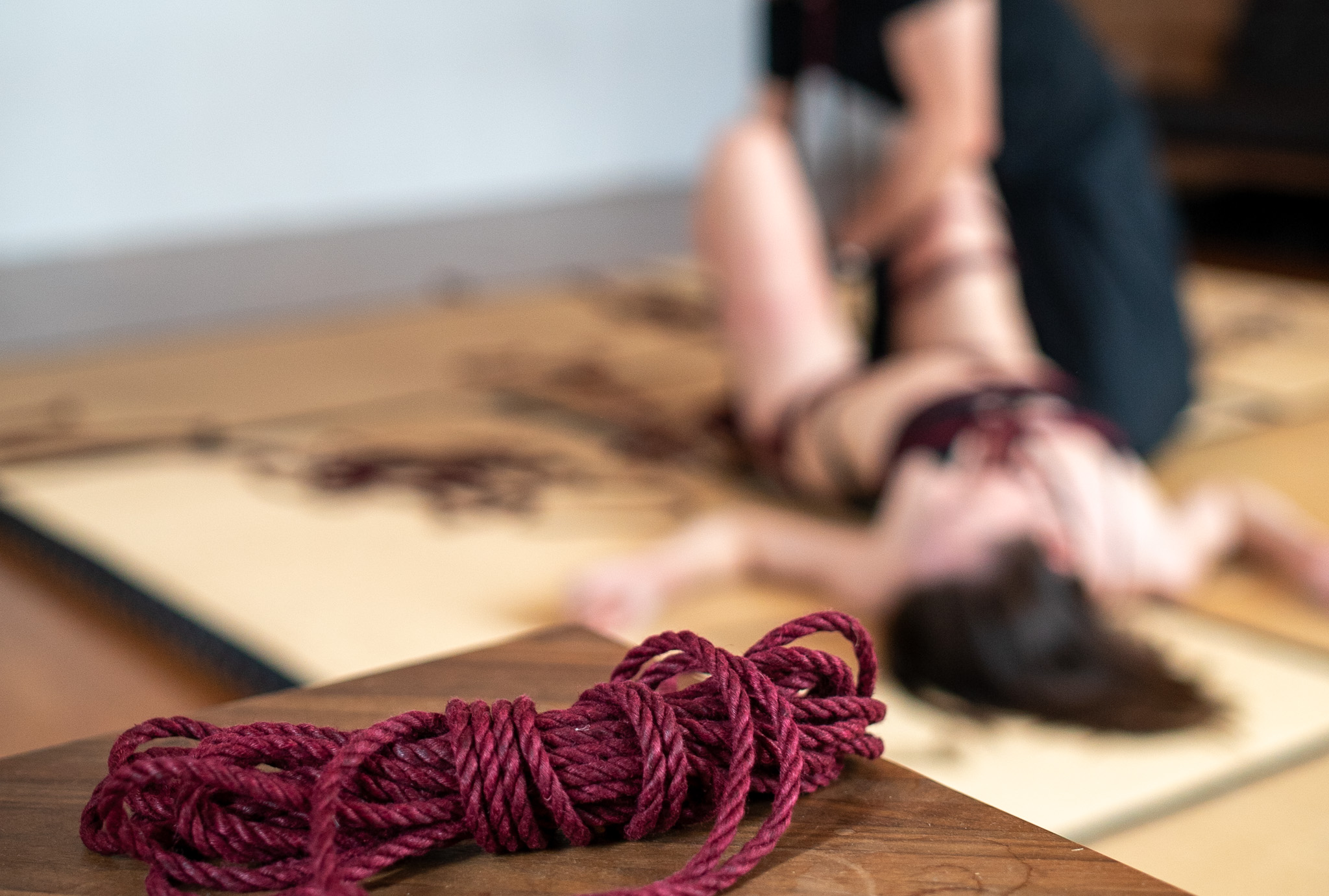
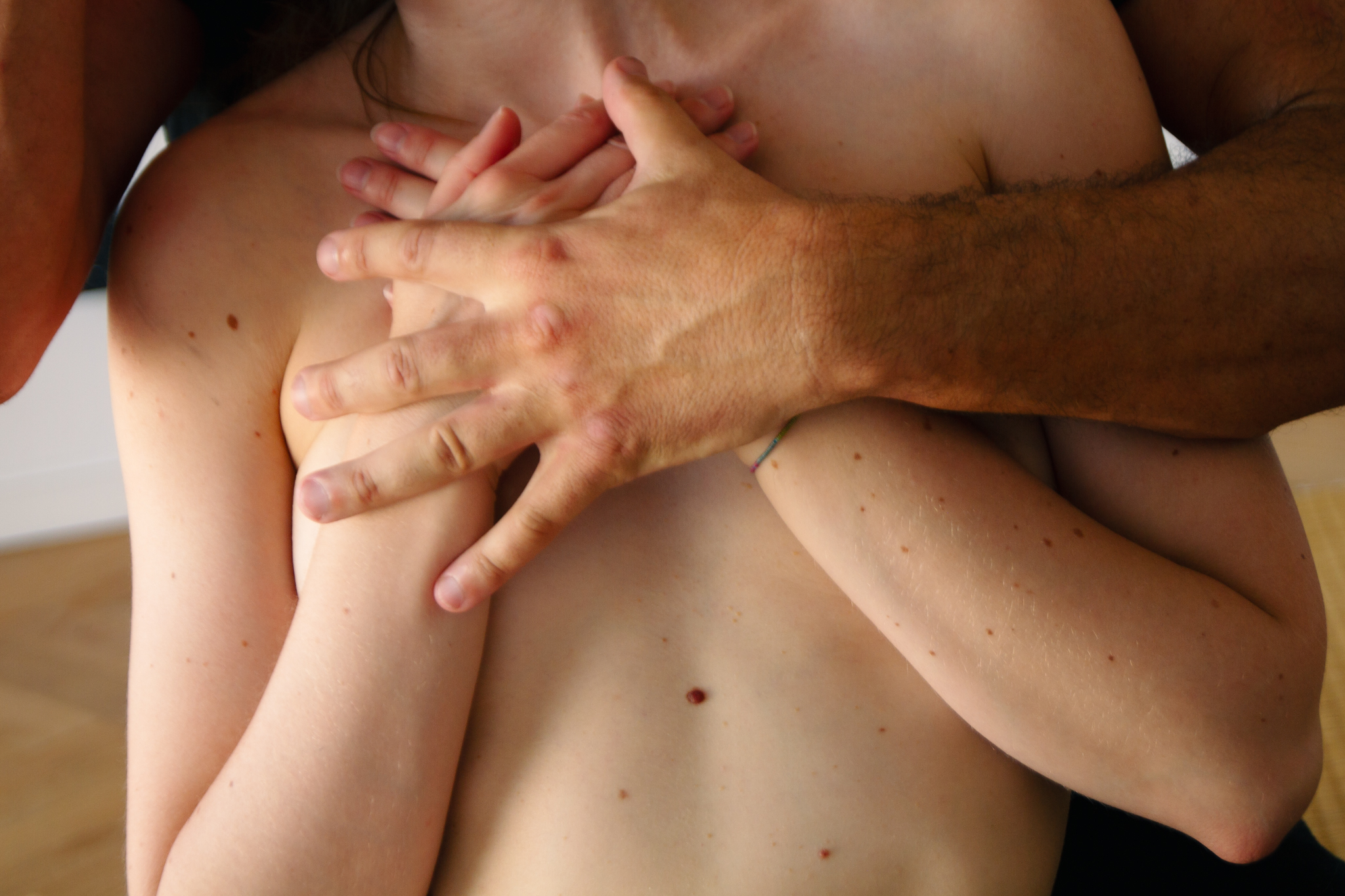
A tantric massage is bodywork that takes sensation and pleasure seriously, not as a goal to reach as fast as possible, but as a language. It does not aim first at the muscular relaxation of a conventional massage, nor at the quick satisfaction of an erotic one. It aims at presence: a quality of attention brought to the body that lets it feel, open, and regulate at its own pace.
That is a simple definition, and it hides a long and often misunderstood history. The word tantra frightens or fascinates, rarely both, and almost always for the wrong reasons. This article is here to clarify, by going back to the source: where tantra comes from, what neo-tantra is, what a tantric massage actually is today, and how I integrate this tradition into my own practice.
Where tantra comes from
Tantra was not born as a sexual practice. That is the first misunderstanding to undo.
Tantra emerged in India around the sixth century of the common era, and developed within Hindu and Buddhist circles until roughly the eleventh century. It was a vast esoteric spiritual movement, with its texts, its rituals, its lineages, and its masters. The word itself comes from Sanskrit. Its root, tan, carries the idea of weaving, extending, unfolding. A tantra, in the original sense, is a text, a weave, a system of practice.
At the heart of this path lay an intuition radical for its time: the body and the sensory world are not obstacles to spiritual life but doors into it. Where other traditions asked for renunciation of the body, tantra proposed to move through it fully. Energy, sensation, breath, and awareness become paths to awakening rather than temptations to flee.
Sexuality held only a marginal place in all of this, reserved for certain schools known as the left hand path, and always within a precise ritual frame. The vast majority of classical tantric practice had nothing sexual about it. To reduce tantra to sex is to mistake a minor branch for the whole tree.
Neo-tantra: how tantra reached the West
What most people today call tantra, in Europe and the United States alike, is not classical Indian tantra. It is neo-tantra, a twentieth century Western current that took certain tantric ideas and wove them together with modern psychology, sexual liberation, and bodywork.
The central figure in that shift is Osho, also known as Bhagwan Shree Rajneesh, an Indian spiritual teacher who, from the 1960s and 1970s onward, notably from his ashram in Pune, offered a new reading. Osho invited people to see sex, love, and spirituality not as separate domains but as aspects of one whole. That stance, scandalous at the time, earned him the label of the sex guru.
It is largely from there that what we now mean by tantra in the West was born: an approach that integrates sexuality and awareness, erotic energy and inner life. Tantric massage, as a formalized bodily practice, is a fruit of this neo-tantric current. It did not exist in this form in ancient India. It is a modern, Western creation that draws on an ancient intuition.
There is nothing dishonorable in that, as long as it is named honestly. A living tradition transforms. The problem is not that neo-tantra is recent. The problem would be to pass it off as something it is not.
Tantric massage today
In concrete terms, a contemporary tantric massage is a session of intimate bodywork, longer and slower than an ordinary massage, that places breath and presence at the center.
You deliberately slow down. You breathe. Intensity rises and falls in waves rather than in a straight line toward an objective. The whole body may be touched, and the attention rests as much on the quality of the contact as on the region being touched. The nervous system is the first thing addressed: before arousal, there is regulation, settling, the safety that lets the body let go.
It is neither a conventional wellness massage nor an erotic service in disguise. The wellness massage aims at muscular relaxation. The erotic massage aims at a result. The tantric massage inhabits the path. Arousal may be present, it is not the point. It is that shift, from result to presence, that defines the practice.
How I integrate tantra into my practice
There are many ways to practice, and I prefer to describe mine rather than speak for everyone.
My practice is rooted in the shamanic tradition. What that path brings is an understanding of the body as a place that holds. The body is an archive: it keeps what language could not contain, tensions never named, thresholds, memories lodged in the tissue. Shamanic work does not try to analyze this. It creates the conditions in which the body can, on its own, let surface and release what it was carrying. Breath, rhythm, presence, sometimes sound, become the tools. Not to force an experience, but to receive it when it comes.
To this I join a somatic listening, informed by the way the nervous system regulates itself. I do not work from a technique applied onto the person. I work from listening. The hand follows the body rather than leading it. Regulation comes before arousal, always. That is the whole difference between touch that tries to produce an effect and touch that is simply, fully present. Every body feels the difference in the same instant.
From this tantric ground, and only on request, two more specific directions are possible. Yoni massage, an attentive and consent based practice devoted to the vulva and the vagina, of which the tradition counts more than forty distinct approaches. And sacred kink, the conscious integration of intensity, power, and surrender inside a sacred, safe frame, where strong sensation becomes a door into the present moment. None of this is ever assumed or offered by default. It exists only if the person names it, and only inside clear, living consent.
The idea running through all of it is simple. Attention is the only intimacy that truly matters. Technique, oil, duration, are only a frame around that quality of presence.
Frequently asked questions about tantric massage
What is a tantric massage?A tantric massage is intimate bodywork that takes sensation and pleasure seriously as a language rather than a goal. It centers breath, slowness, and presence, and favors nervous system regulation before arousal. It differs from a wellness massage, which aims at muscular relaxation, and from an erotic massage, which aims at a result.
What does the word tantra mean?Tantra is a Sanskrit word whose root, tan, means to weave, to extend, or to unfold. Originally, a tantra is a text or a system of spiritual practice. The term names a vast Indian esoteric movement, not a sexual practice.
Where does tantra come from?Tantra emerged in India around the sixth century of the common era and developed within Hindu and Buddhist traditions until roughly the eleventh century. It was a broad spiritual movement in which ritualized sexuality was only a marginal component, reserved for certain schools.
Is tantra a sexual practice?No, not originally. Classical tantra was a spiritual path that treated the body and sensation as doors to awakening. Sexuality held only a minor place in it. The close association between tantra and sexuality is mainly a feature of Western neo-tantra.
What is neo-tantra?Neo-tantra is a twentieth century Western current that took tantric ideas and combined them with modern psychology, sexual liberation, and bodywork. The Indian spiritual teacher Osho, from the 1960s and 1970s onward, was a central figure in presenting sex, love, and spirituality as one whole. Tantric massage as we know it today comes from this current.
What is the difference between a tantric massage and an erotic massage?An erotic massage aims at a result, usually arousal and its resolution. A tantric massage inhabits the path rather than the destination: arousal may be present, but the goal is presence and the opening of the body. The distinction lies in intention, not only in the gestures.
How does a tantric massage unfold?A session begins with a conversation about what the person is looking for and does not want. Then comes slow work centered on breath, where intensity rises and falls in waves, with no objective to reach. The session ends with a gradual return in safety. It rarely lasts less than two hours.
Is tantric massage suitable for women, men, and couples?Yes. It speaks to women seeking a return to their sensuality or simply more depth, to couples who want to touch each other with more presence, and to anyone wishing to learn rather than only receive. Bodies are not defined by fixed roles.
Is tantric massage governed by consent?Yes, and it is central. Consent is not a box ticked at the start, but a living conversation that runs underneath the whole session. Safety is what makes possible the release this work can bring up.
Can yoni massage or sacred kink be included in a session?Only on explicit request and inside clear consent. They are possible directions from the tantric ground, never offered by default.
Going further
If this reading answered your questions and opened others, that is a good sign. A tantric massage is understood better from inside the experience than from a definition.
I offer tantric massage sessions and private teaching in Geneva and French speaking Switzerland, rooted in the shamanic tradition and, on request, open to yoni massage or sacred kink. To talk it through or ask a question, send me a direct message on Instagram at @aether_olivier_, or use the contact link in the profile. No pressure, no assumptions. Just a conversation.


Komm, tritt ein in den heiligen Tanz der Kapitulation.
Dies ist eine Einladung an alle, die sich danach sehnen, mehr zu fühlen, tiefer zu vertrauen und sich selbst neu zu begegnen.